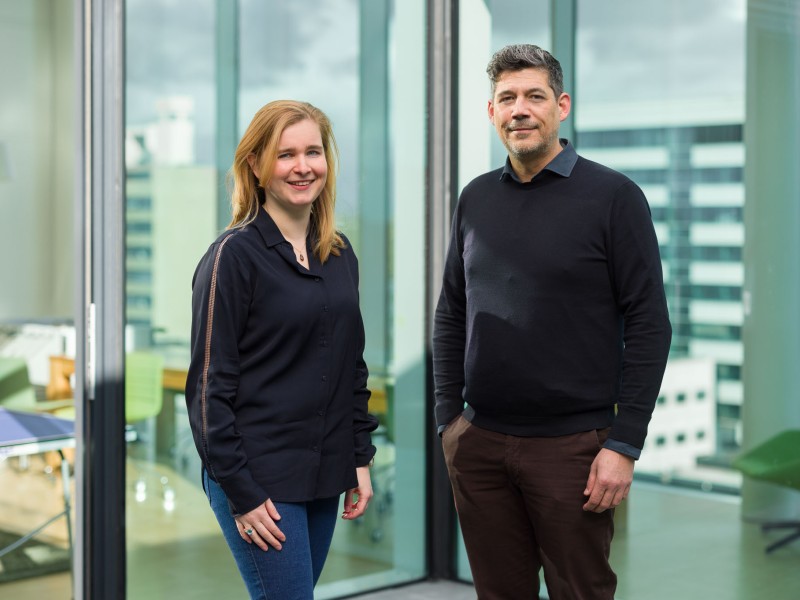
‘It’s exciting when the pieces of the puzzle fall into place’ — Dr Rachel Gurrell, Noema Pharma
The journey of a compound from lab to clinic is often challenging. Pharmacologist Dr Rachel Gurrell, Head of Research and Early Development at Noema Pharma, describes how CHDR provided crucial data in the clinical development of darigabat. This compound, a selective GABA-A receptor positive allosteric modulator (PAM), is currently in a phase 2 trial in adults with drug-resistant focal seizures and will shortly enter a phase 2 trial in panic disorder at Cerevel Therapeutics.
The story of the molecule now known as darigabat began at Pfizer, where Gurrell and her colleagues initially explored its potential in treating epilepsy, anxiety states and chronic pain. ‘It is selective for the α2/3/5 subunits of the GABA-A receptor. These are the subunits that are believed to modulate seizures and anxiety in particular. And it avoids the α1 subunit, which is implicated in the sedative properties of benzodiazepines,’ says Gurrell. ‘However, similar compounds still showed sedative effects when they were first tested in humans. So we went to CHDR, because of their experience with biomarkers for selective GABA-A modulators. Specifically, we wanted to verify the EEG profile, which showed a wave pattern distinct from classical benzodiazepines in preclinical animal models.’
[text continues below the photo]

Pharmacological insight
Trials with healthy volunteers were conducted at CHDR using the NeuroCart® CNS test battery. These trials confirmed what Gurrell and her colleagues had seen in the lab: both EEG and other NeuroCart parameters such as body sway and saccadic eye movements indicated that the compound was active at the GABA-A receptor without sedating the trial participants. Gurrell: ‘In science, it’s exciting when the pieces of the puzzle start to fall into place and reveal the picture that you were expecting to see. Everything we hypothesised was basically borne out. In addition, we gained clear insight into the pharmacology as well as the safety profile. This was key for the further development of the molecule.’
Further development focused on epilepsy and lower back pain. ‘On my initiative, we conducted a trial using CHDR’s PainCart® — in fact, ours was one of the first sponsored trials to use it. Pfizer subsequently did several PainCart trials at CHDR.’ The compound turned out not to be viable as a pain medication, but did proceed to phase 2 trials for epilepsy.
Around the same time, Pfizer decided to spin out much of its activities in neuroscience. The clinical development of the compound was continued at Cerevel Therapeutics. It was Cerevel who gave the compound its current name — darigabat — and decided to explore its potential for the treatment of both seizures and panic disorder. Gurrell also moved to Cerevel, where she headed the darigabat programme, as well as the Translational Medicine and Biomarker department.
CO2 challenge
To explore the effects of darigabat on panic, Gurrell once again turned to CHDR. ‘Gabriel Jacobs and his team had just added a promising model to their repertoire: the CO2 challenge,’ says Gurrell. ‘We needed to bridge the gap between our preclinical and phase 1 data and trials in patients. So I researched which models would be able to identify the compound’s effect on panic in healthy volunteers. The CO2 challenge model came out on top, also in terms of the drugs that had already been tested with it. And it turned out that CHDR had just concluded a trial with another compound, using a benzodiazepine as active control, which was the perfect preparation for the trial we wanted to perform.
‘We collaborated on the trial design, and also drew on input from Prof. Koen Schruers of Maastricht University who has years of experience working with the CO2 challenge model,’ says Gurrell. ‘When the results came in, we were really pleased. We knew we had a solid basis to continue developing darigabat for this indication.’ CHDR’s Clinical Scientist Koshar Safai Pour, who was project leader for this trial, will write a PhD thesis based on these trials. ‘That’s something really valuable that CHDR does — offering opportunities for people to develop themselves through their work.’
Cerevel has announced that darigabat will enter a phase 2 trial in patients suffering from panic disorder. If the compound successfully makes it to market, it will contribute to the quality of life of patients with this debilitating condition. In the meantime, Gurrell has moved to Noema Pharma, where she is Senior Vice President, Head of Research and Early Development, as well as programme lead for a novel therapeutic for major depressive disorder with atypical features.
Interested in learning more?
More articles from Developing drugs